The World on Pause, Not at Peace: Power, Pressure, and the Politics of a Restless Planet
The world today does not stand still—it negotiates its own instability in real time. As of April 2026, the global political landscape resembles a tightly wound spring, held in place by fragile ceasefires, recalibrated alliances, and simmering tensions that refuse to settle. What appears as calm is often choreography; what seems like stability is, in truth, strategy buying time. The headlines are not isolated events—they are interconnected signals in a world where geopolitics, economics, and human aspiration collide with increasing frequency.
At the epicentre of this global theatre lies the Middle East, where a tenuous ceasefire involving Iran, Israel, and the broader regional matrix has created a pause—but not a resolution. The extension of the truce, reportedly brokered with significant involvement from the United States, reflects a diplomacy that is reactive rather than transformative. Ceasefires, in this context, function less as peace agreements and more as pressure valves—temporarily releasing tension without addressing its source.
The Strait of Hormuz, through which nearly 20% of the world’s oil supply transits, has once again become a geopolitical chokepoint. Iran’s continued blockade has sent oil prices soaring above $106 per barrel, reminding the world that energy security remains the fulcrum upon which global stability pivots. The United States’ naval interventions—boarding vessels and enforcing sanctions—further complicate the scenario, transforming economic measures into quasi-military engagements.
This is not merely a regional conflict; it is a systemic tremor, as the International Monetary Fund has aptly described it. The ripple effects extend far beyond the Middle East, influencing global inflation, trade flows, and investor sentiment. Airspace restrictions over West Asia, for instance, have disrupted aviation networks, leading to delays and increased costs for carriers across Europe and Asia. In an interconnected world, even the sky becomes a contested domain.
Yet, geopolitics today is not confined to conflict zones—it permeates economic policy. In the United States, the resurgence of “economic nationalism” under Donald Trump signals a shift from globalization to strategic self-interest. Trade policies are increasingly weaponized, tariffs recalibrated not just for economic gain but for geopolitical leverage. The delay of the anticipated summit between Trump and Xi Jinping underscores the prioritization of immediate crises over long-term strategic dialogue.
At the same time, the symbolic gesture of “panda diplomacy”—China’s decision to send giant pandas to Zoo Atlanta—illustrates the nuanced interplay of soft power in a hard-edged world. Diplomacy today operates on multiple frequencies: overt negotiations, covert strategies, and symbolic gestures that signal intent without commitment. [x]
Europe, meanwhile, finds itself at a crossroads of political transformation and strategic recalibration. The electoral shifts in Hungary challenge the long-standing dominance of Viktor Orbán, reflecting a broader trend of political reconfiguration across the continent. Democracies are being tested—not just by external pressures, but by internal realignments that question the very nature of governance.
The European Union’s 20th round of sanctions against Russia further exemplifies the persistence of geopolitical fault lines. Targeting energy sectors, military-industrial complexes, and crypto-financial systems, these measures reveal a strategic intent to weaken adversarial capabilities without direct confrontation. Yet, sanctions are double-edged—they constrain the target, but also reshape global markets, creating new alliances and dependencies.
In a different vein, the strengthening of ties between Germany and South Africa, marked by a €200 million loan for energy transition, highlights the emergence of strategic partnerships that blend economic cooperation with geopolitical alignment. Such alliances reflect a world where influence is no longer monopolized but distributed across networks of mutual interest.
The Asia-Pacific region, often seen as the engine of global growth, is equally marked by tension and transformation. In Thailand, the political crisis involving opposition lawmakers underscores the fragility of democratic institutions in the face of legal and constitutional challenges. Governance, in such contexts, becomes a balancing act between authority and accountability.
In India, the declaration by Amit Shah that the nation is free of Maoist insurgency marks a significant internal milestone. It signals not just a security achievement, but a shift in the country’s developmental narrative—from conflict management to growth acceleration. Yet, India’s diplomatic rebuke of Trump’s controversial remarks reveals the complexities of international relationships, where economic partnerships coexist with political sensitivities.
Meanwhile, China’s deepening ties with Cambodia through “2+2” strategic dialogues highlight the expansion of influence through structured cooperation. This reflects a broader trend of regional consolidation, where nations seek to anchor themselves within networks of security and economic collaboration.
Amid these political currents, the global economy moves with cautious momentum. The International Monetary Fund projects global growth at around 3.1% for 2026, a figure that reflects resilience but also restraint. Growth persists, but it does so under the shadow of uncertainty—shaped by geopolitical tensions, trade disruptions, and financial vulnerabilities.
The most pressing concern, however, remains the intersection of geopolitics and economics. Energy prices, driven by Middle Eastern tensions, feed into inflationary pressures worldwide. Trade tensions between major powers disrupt supply chains, increasing costs and reducing efficiency. Aviation disruptions add another layer of complexity, affecting tourism, logistics, and business operations.
In essence, the global economy today is not just interconnected—it is interdependent and inter-fragile. A disruption in one domain reverberates across others, creating a cascade of effects that are difficult to predict and harder to contain.
From an educational perspective, this moment offers profound insights. It underscores the importance of systems thinking—understanding how political decisions influence economic outcomes, how economic pressures shape social realities, and how social dynamics feed back into political structures. The world today is not a collection of isolated disciplines; it is an integrated system where every component influences the other.
There is also a deeper philosophical reflection embedded in this landscape. The persistence of conflict, the recurrence of economic instability, and the fragility of political systems raise fundamental questions about the nature of progress. Are we advancing, or merely adapting? Are we solving problems, or managing them?
The answer lies in how we interpret and respond to these challenges. The convergence of crises demands a convergence of solutions—policies that are holistic, strategies that are adaptive, and leadership that is both pragmatic and visionary.
In conclusion, the global political and economic landscape of 2026 is a study in contrasts: stability and volatility, cooperation and competition, progress and uncertainty. It is a world that continues to function, but under increasing strain—a world where the margins for error are shrinking, and the stakes are rising.
The ceasefire in the Middle East may hold—for now. Trade tensions may ease—or escalate. Political shifts may stabilize—or disrupt. But beneath these uncertainties lies a constant truth: the world is in transition, and the direction of that transition will be shaped by the choices we make today.
For individuals, institutions, and nations alike, the imperative is clear: to move beyond reaction and toward understanding. For in a world where events unfold at the speed of information, the ability to interpret, anticipate, and adapt becomes the ultimate advantage.
The world is not at rest—it is recalibrating. And in that recalibration lies both risk and possibility, waiting to be shaped by those who can read the signs beneath the surface.
References:
- [X]
- Reuters. Global political and economic updates, April 2026. [Link]
- Al Jazeera. Middle East conflict and ceasefire coverage. [Link]
- International Monetary Fund. Global growth projections and economic impact analysis, 2026. [Link]
- Global energy market data on oil prices and Strait of Hormuz impact. [Link]
- International aviation and trade disruption reports, 2026.[Link] [Link]
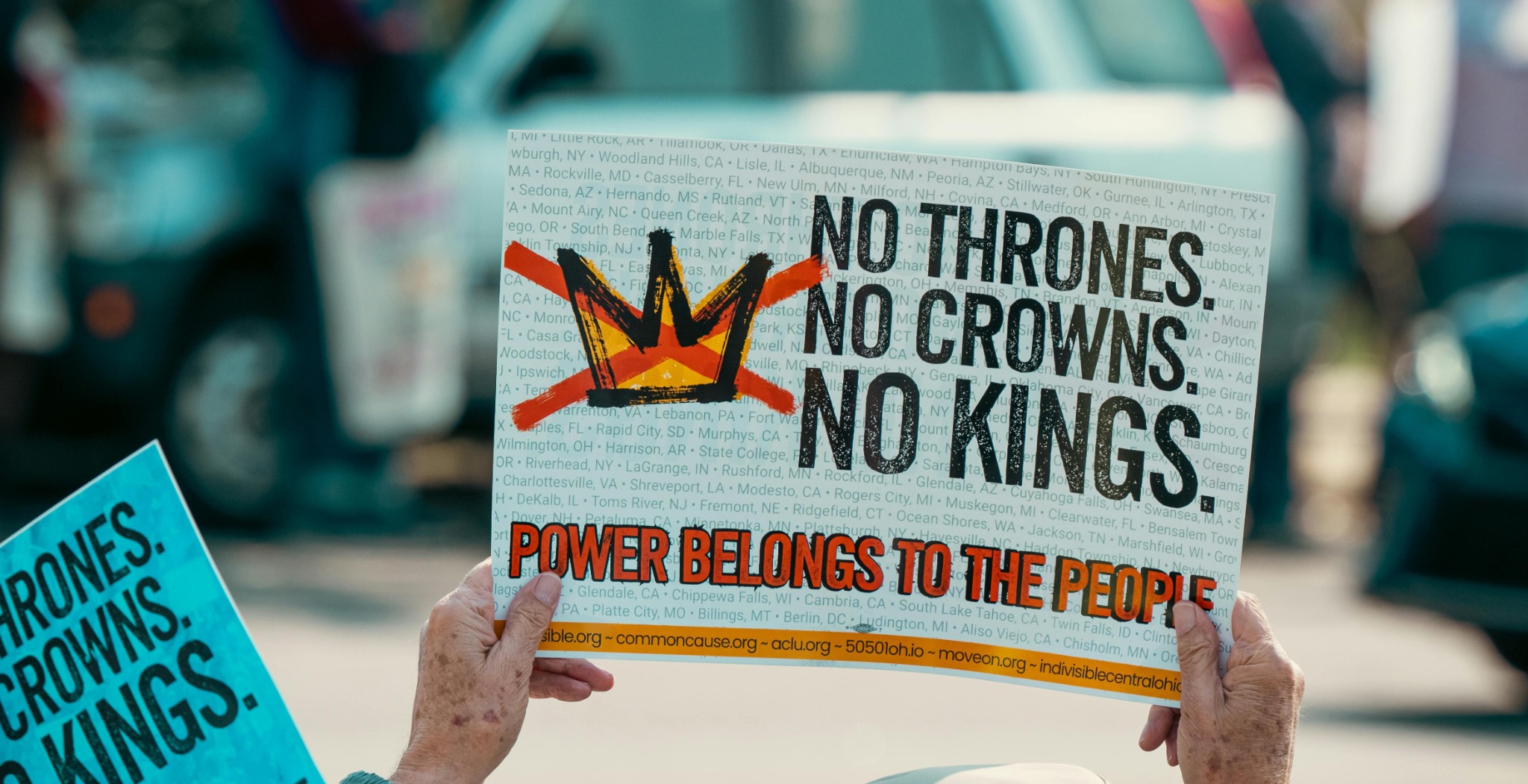
Image Courtesy: https://www.pexels.com/photo/protesters-holding-anti-monarchy-sign-at-rally-34355594/
Post a comment